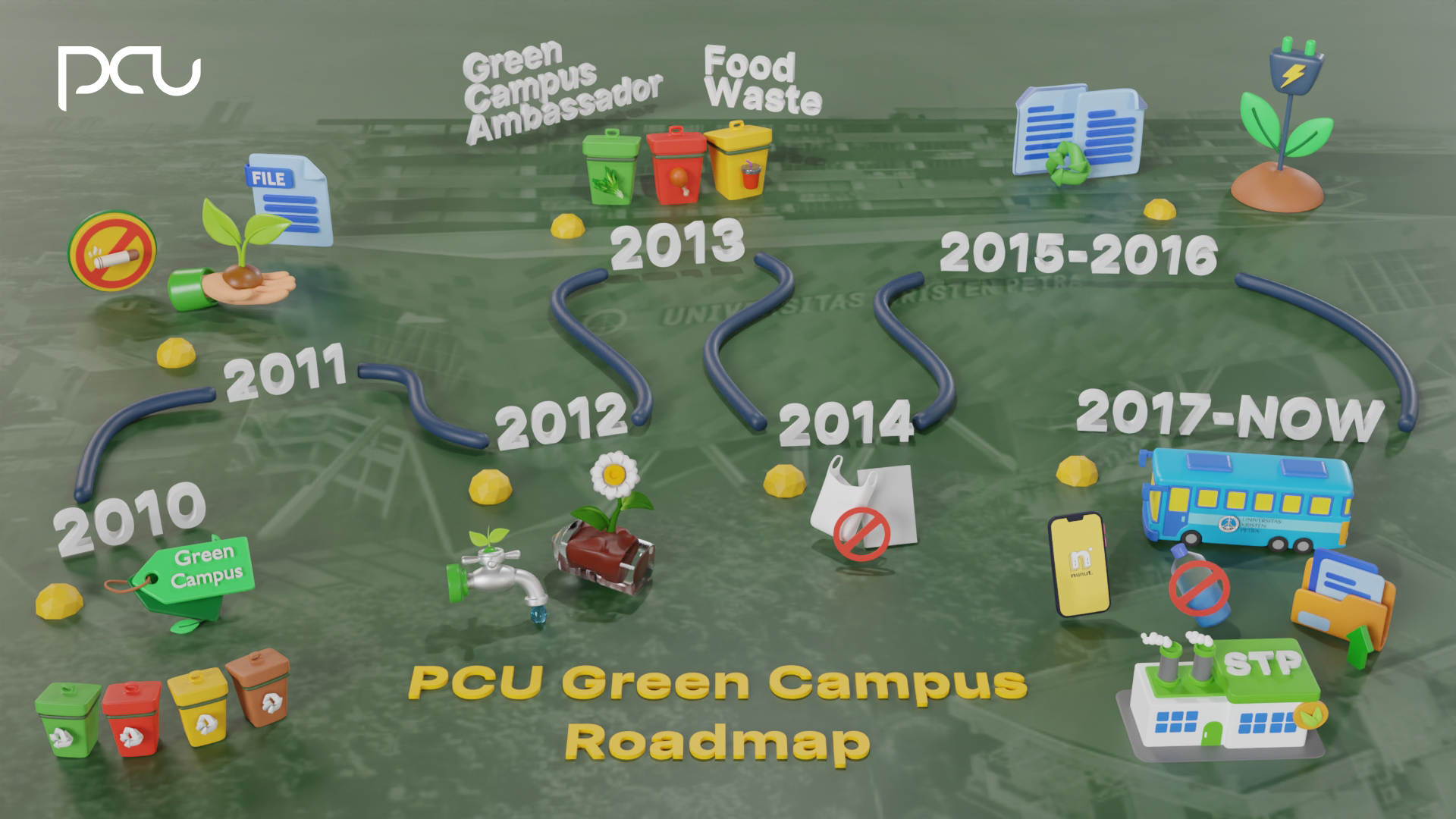
Petra Christian University (PCU) has solidified its commitment to becoming a Green Campus since September 22, 2010. This commitment was realized through the establishment of a Smoke-Free Zone on January 1, 2011.
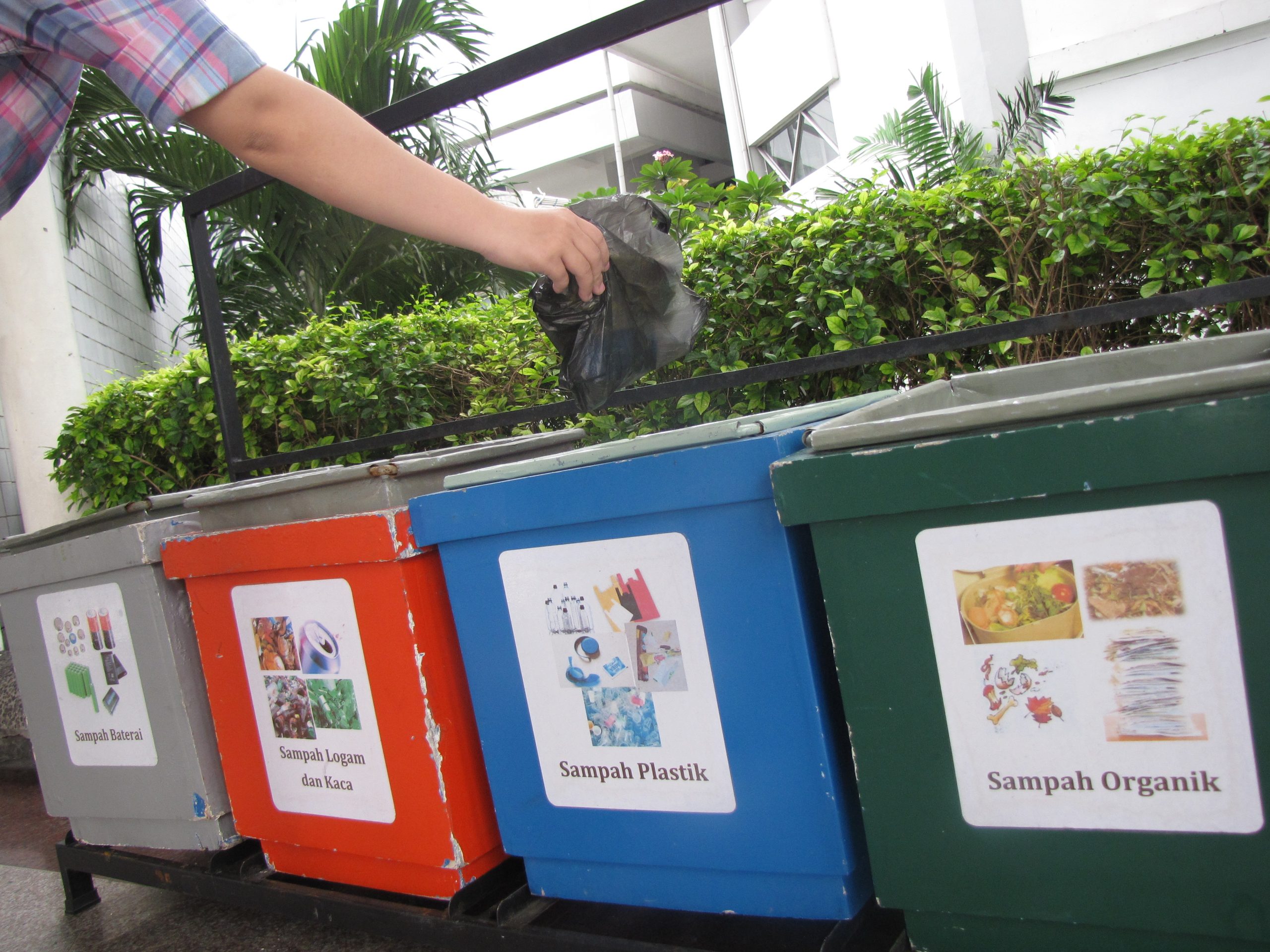
Before the implementation of the Smoke-Free Zone on campus, Petra Christian University had sorted waste into four categories. The waste is divided into organic waste, plastic waste, paper waste, and battery waste.
Since becoming a Smoke-Free Zone in 2011, Petra Christian University has continuously contributed to a healthier environment. One of the initiatives was the "Petra Berbunga" movement, involving tree planting. Moreover, Petra Christian University ran a paperless movement by starting online PRS filling activities, providing electronic payslips, making letters online, and encouraging the use of recycled paper during final assignment consultations.
In the following year, Petra Christian University campaigned for the "Efficient Water" program. This campaign was followed by the replacement of all water taps on campus with automatic faucets. Hence, the use of clean water is not wasted. Simultaneously, Petra Christian University started converting waste into compost.
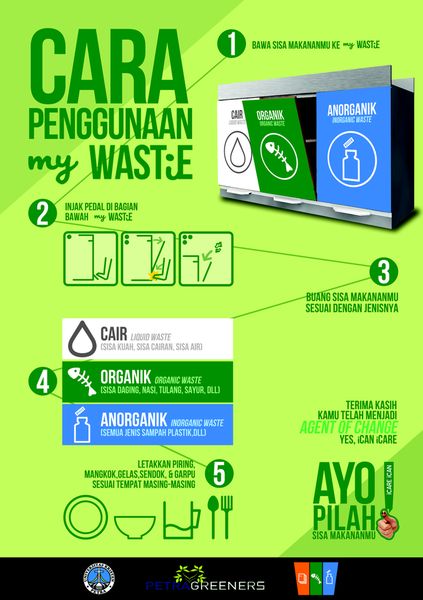
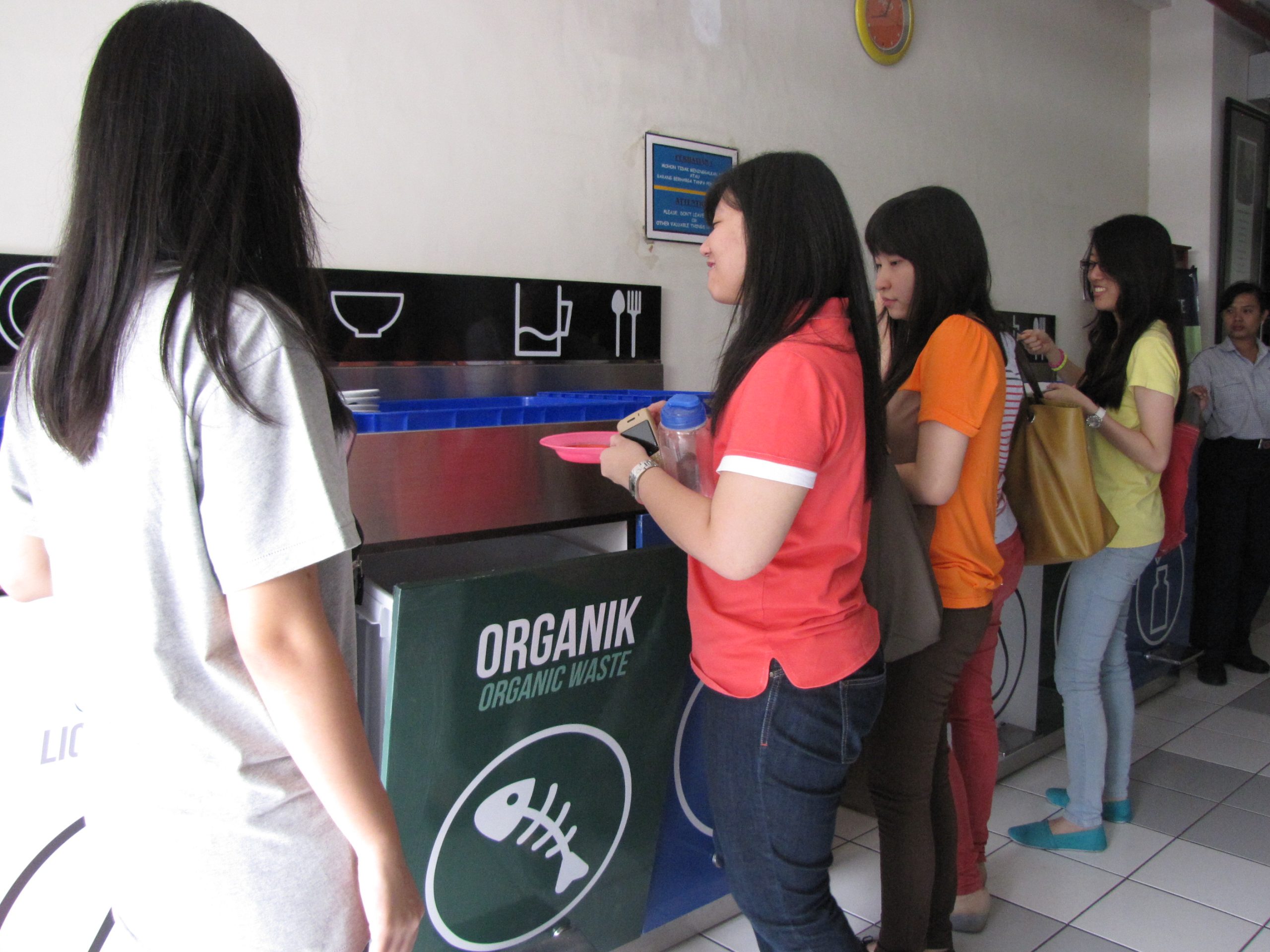
The Rector's Decree Number 251 of 2013 stipulates Petra Christian University as a Green Campus with a vision of caring and committing to Christian values. Consequently, Petra Christian University actively participates in preserving the earth and the environment created by God. With this designation, PCU also appointed Green Campus ambassadors. Furthermore, PCU started sorting food waste into three categories: organic waste, inorganic waste, and liquid waste.
This Green Campus policy is carried out in academic areas which are demonstrated through several programs related to environmental preservation to raise student awareness and concern. In addition, this Green Campus provision is also accommodated through the offer of Elective Courses on the Environmental Studies.
In other areas, this policy is also implemented by raising the awareness among all employees on environmental preservation. For example, it involves reducing electricity consumption, water usage, personal vehicle use, and paper usage.
The implementation of the Green Campus program is carried out in three stages: short-term programs, medium-term programs, and long-term programs.
Furthermore, the implementation of Green Campus in the medium-term program is implemented in five efficiency programs. One of them is the waste efficiency program.
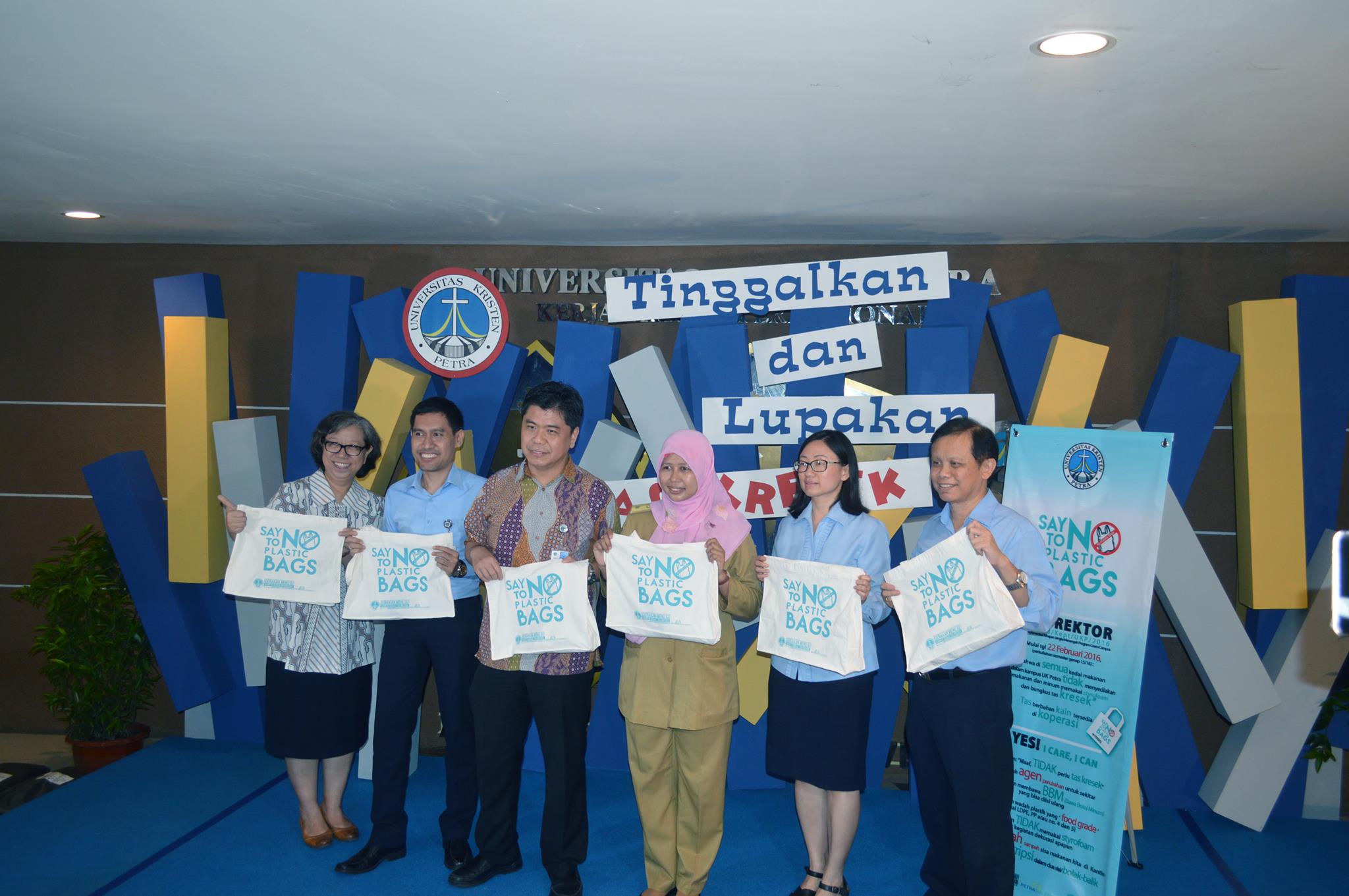
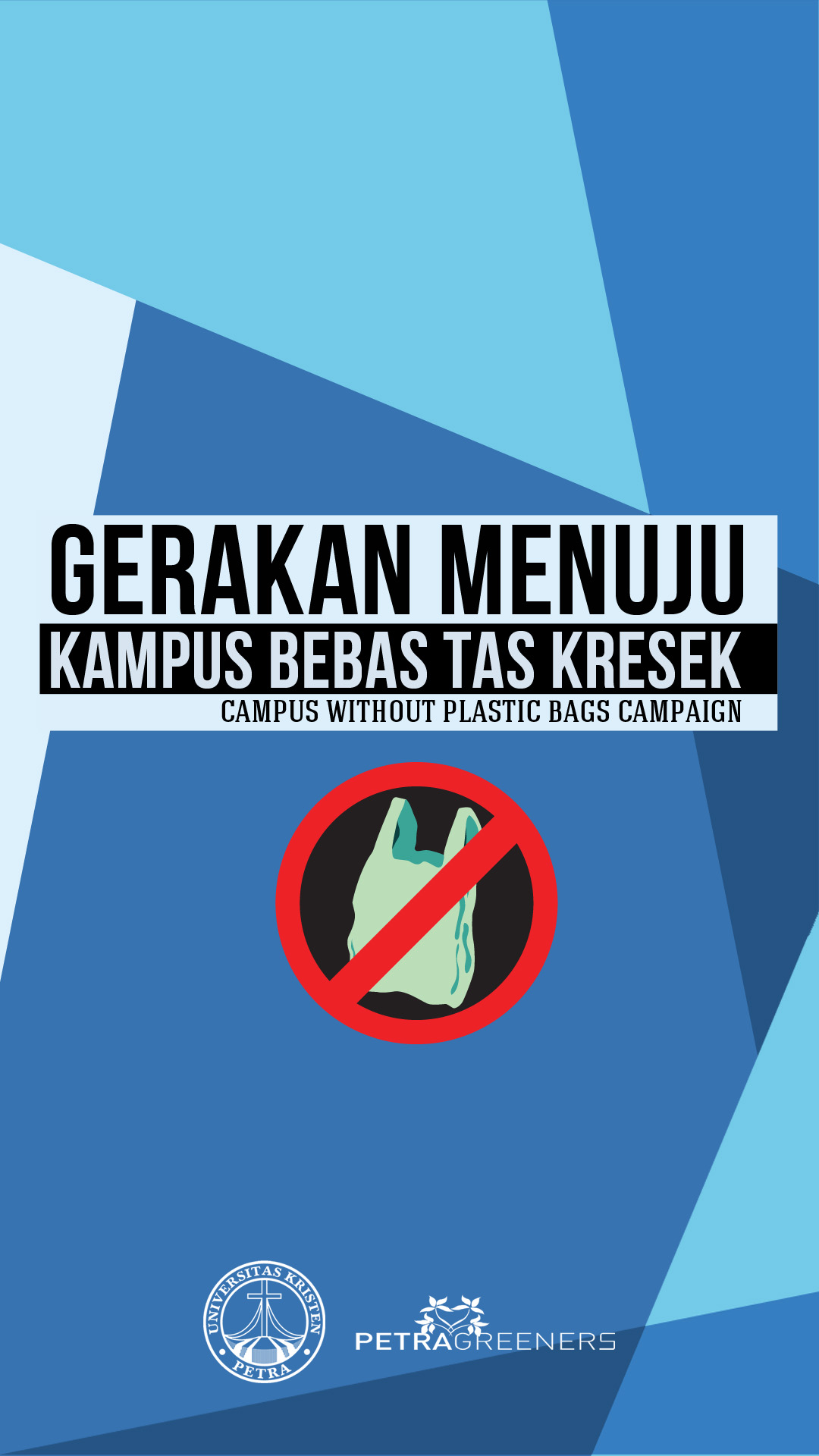
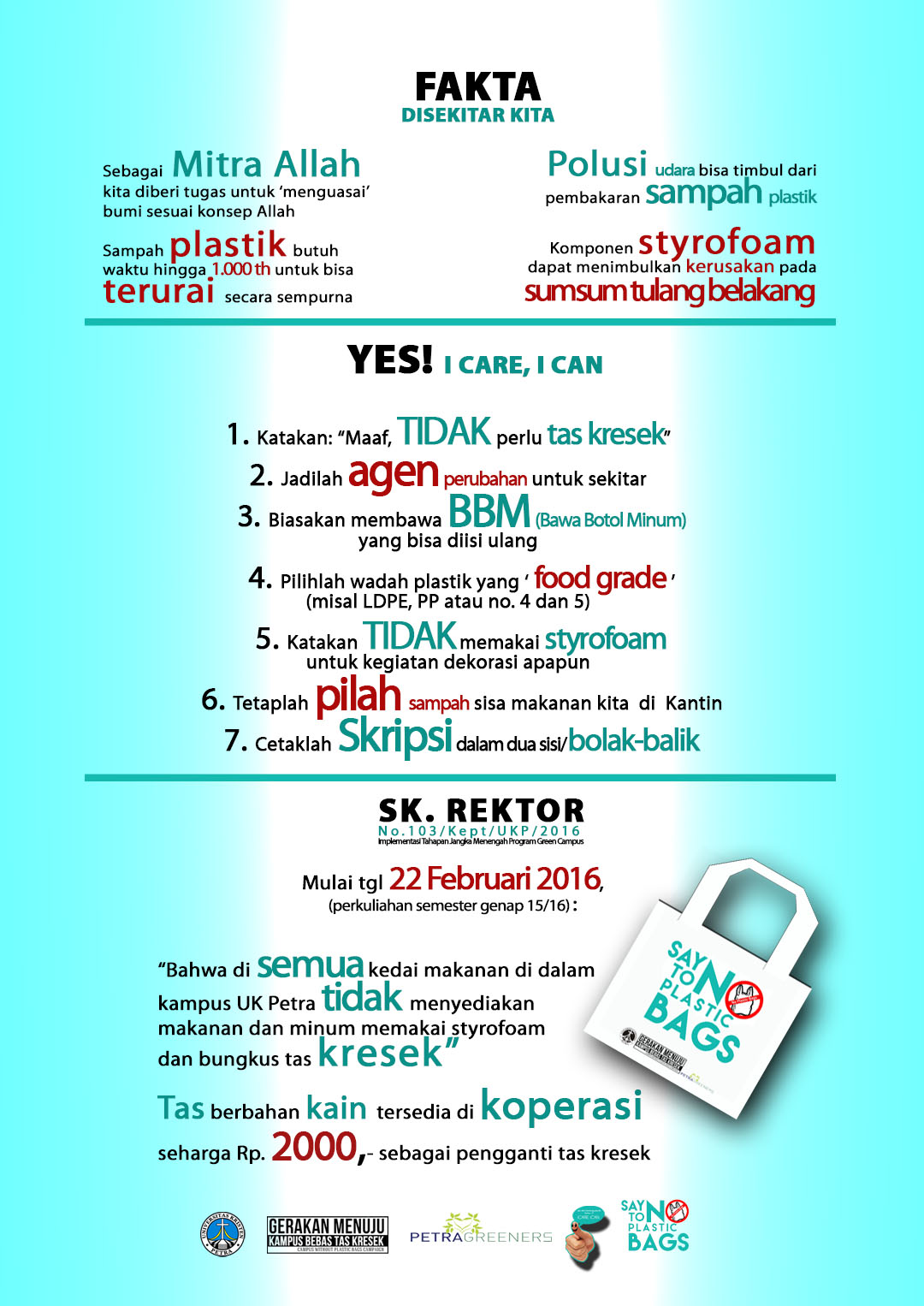
A notable model for waste efficiency is not using plastic bags in any sales transactions. Instead, reusable bags that can be purchased are provided at all selling points. Additionally, the use of styrofoam and plastic packaging for food is prohibited. This policy was established in the Rector's Decree in 2016, but its implementation started since 2014.
In 2015 and 2016, the paper and energy efficiency programs were implemented. Used paper is used for non-formal purposes. In terms of energy efficiency, the classrooms are automatically locked and the electricity is turned off with the use of fingerprints when not in use. In addition, it also campaigned for the use of stairs over elevators.
From 2017 to the present, several initiatives have been implemented in the Green Campus program. Firstly, the use of bottled drinking water for internal activities is not allowed. Theses and final assignments are submitted online. Furthermore, the university provides shuttle buses to reduce private vehicle usage. The campus also implements a Sewage Treatment Plant (STP) and the establishment of gardens and water-saving toilets.
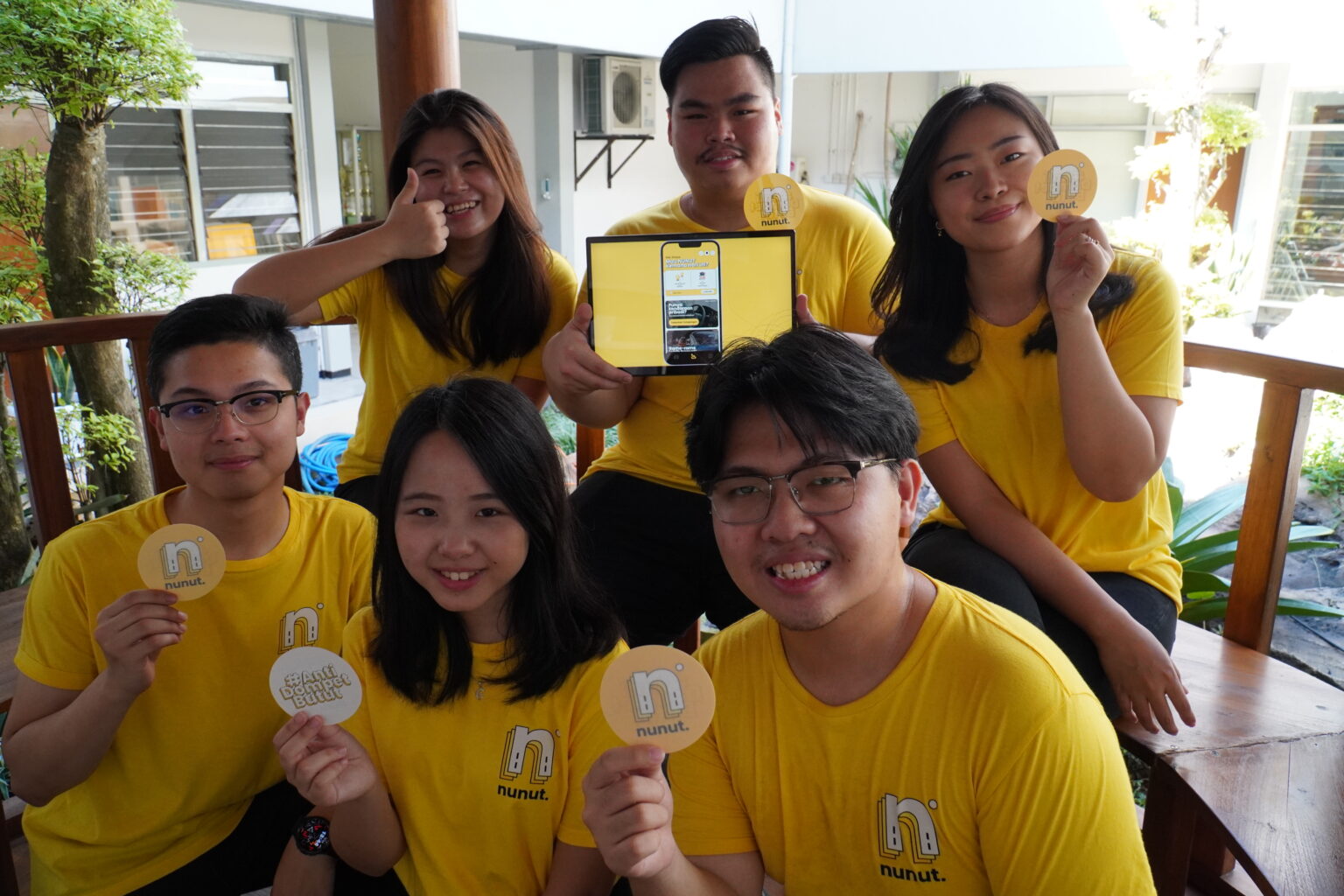
The latest addition is the "Nunut" application initiated by students. This application facilitates ride-sharing. This is done to reduce private vehicle usage and its impact on the environment.
The Green Campus initiative is not a mere trend but a sincere effort rooted in Christian faith, with the goal of preserving God's creation, the Earth.